
Buying a Eurail Pass
The Eurail Pass, a convenient rail pass that allowed non-European tourists unlimited train travel across most of Europe, has now been rebranded as Interrail.
As of September 2026, Eurail and Interrail have been brought together under the Interrail brand, meaning travelers no longer need to choose between the two pass systems based on where they live. In the past, Interrail was reserved for European residents, while travelers living outside Europe had to use Eurail instead. That distinction has now disappeared. The Interrail Pass is now available to travelers worldwide. Eurail Passes have been discontinued, with the Interrail Pass now available to everyone regardless of their country of residence or nationality.
The Interrail Pass offers the same flexible rail travel that you may have previously enjoyed with Eurail. Interrail Passes work in exactly the same way as Eurail Passes did and are priced at the same levels, so from a traveller’s perspective, very little has changed apart from the name.
The most popular Interrail passes and their prices are listed below. Seniors (60+) and youths (12–27) can enjoy discounted fares, while children aged 4–11 travel free when accompanied by an adult. Click ‘buy pass’ to select your ticket, choose first or second class, apply any eligible discounts, and complete your booking.
Interrail: How does it work?
Just like the Eurail Pass, an Interrail Pass gets you unlimited train travel across Europe within a set timeframe, ranging from a few days to three months. Most European train companies accept Interrail, although a few exceptions apply. The greatest advantage of the pass is its flexibility – travellers can board most trains without purchasing individual tickets for each journey.
Although certain high-speed and sleeper trains require a seat reservation or small supplement in addition to your Interrail pass, the pass gives free access to the many regional and local trains that don’t require reservations. Simply put, Interrail makes for an affordable and highly convenient way to travel across Europe!
An Interrail Pass is especially useful for travellers planning multi-stop journeys across Europe. If your trip involves visiting several cities across different countries, and you intend to cover long distances, the pass offers the greatest value. Another major advantage is the freedom it provides. On your travel days, you can decide whether to take the morning train or a later one in the afternoon, something that wouldn’t be possible with a standard ticket tied to a fixed departure. The pass also makes it easy to make a stopover or detour whenever you spot something interesting along the way.
That said, travellers with an itinerary set in stone can also make good use of an Interrail Pass, as in many cases it can be cheaper than buying regular point-to-point train tickets. This is especially true when travelling through European countries with high rail fares, such as Germany, Switzerland, and the UK. Even if your itinerary is fixed, the flexibility of your pass still comes in handy if you happen to face a sudden train cancellation, a rail strike, or another unexpected situation. With an Interrail Pass, it is much easier to adjust your route, since you can simply board an alternative train included in the pass – something far more difficult when relying on regular tickets.

Different INTERRAIL passes
Interrail Passes come in two versions. The Global Pass covers train travel across all 33 European countries included in Interrail. The One Country Pass does exactly what it says – it only allows unlimited travel within a single European country of your choice.
There are also differences in duration. Flexi Passes provide unlimited train travel on a set number of days within a certain period. For example, you could choose a pass that gives you 4 days of unlimited travel (on dates you select) within one month. Continuous Passes, on the other hand, allow unlimited travel on consecutive days. For instance, a 1-month Interrail Pass gives you one full month of unlimited train travel across Europe. This way, you can pick the pass that best matches your plans and budget.
All Interrail Passes are available for both second class and first class travel. Again, all of this is the same as it used to be when the pass was still branded as Eurail!
INTERRAIL reservations
When it comes to making actual reservations, an Interrail Pass works in the same way as Eurail did previously.
Although an Interrail Pass gives you unlimited train travel, you may need to make an additional seat reservation or pay a supplement to use certain premium trains, such as some high-speed, long-distance, and international services. The same applies to night trains, where you must, of course, reserve a berth in a couchette or sleeper compartment in advance. Higher supplements apply if you choose private occupancy of an entire compartment on a night train, compared with passengers willing to share.
On trains where reservations are not required – or even possible – such as many suburban, regional, and interregional services, you can simply board and take any available seat.
In some European countries, such as Germany, Austria, and the United Kingdom, long-distance and even high-speed trains operate with optional rather than compulsory seat reservations. These trains usually do not require a reservation, and you can board freely and take any available seat. However, it is advisable to reserve a seat during busy travel periods or on popular routes to be sure of having one.
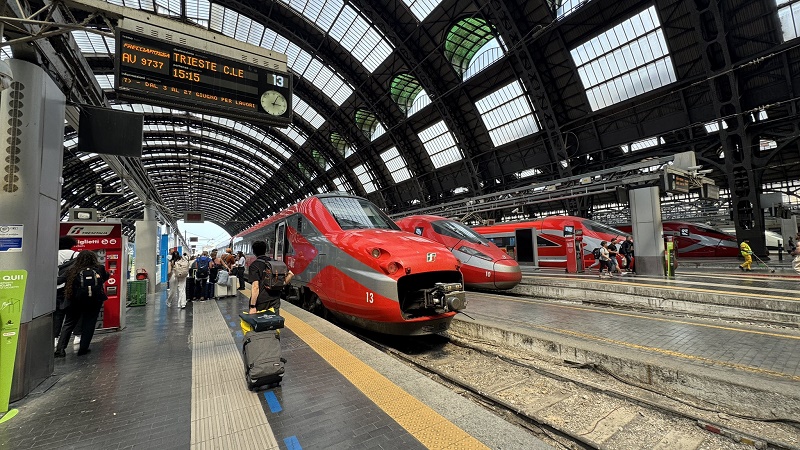
In other European countries, such as France, Spain, and Italy, seat reservations are compulsory on long-distance and high-speed trains. The same applies to Eurostar. This means that even though your Interrail Pass serves as your train ticket, you still need to make an additional seat reservation to board these trains. In such countries, it is best to book your reservation as early as possible, since waiting too long carries the risk that your preferred train will be fully booked. If that happens, you would have no choice but to take a different service.
Where to book INTERRAIL seat reservations?
Interrail seat reservations can be made through several channels, including the official Interrail website, at train stations across Europe, and often (though not always) on the websites of individual rail operators. In some cases, it is not possible to reserve a seat or night train berth online, and you must do so in person at a railway station within the country.
Read our guide to Interrail passholder reservations for a detailed explanation of the best way to reserve seats on the trains you want to take.